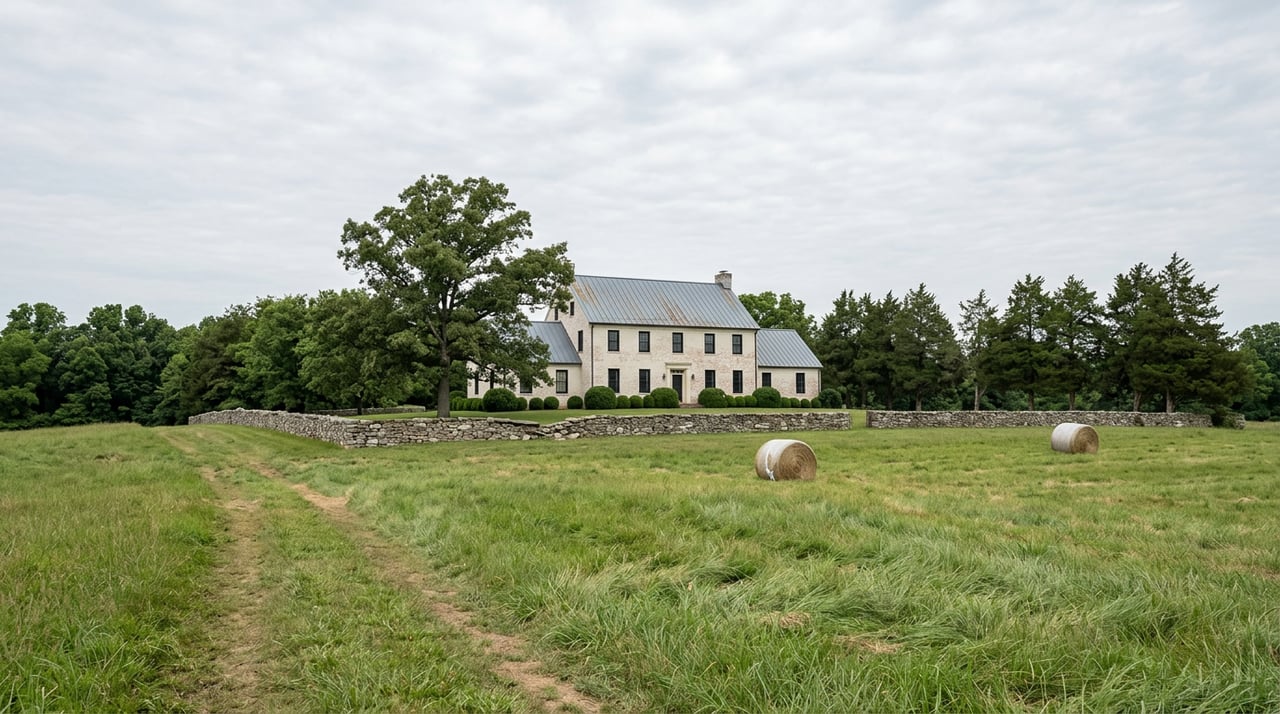
On the evening of August 6, 2026, the packed room at the Middleburg Community Center wasn't there to celebrate. Major General Antoinette Gant stood in front of a standing-room crowd of about 200 people, including U.S. Representative Suhas Subramanyam, and confirmed what the horse community had spent months bracing for: the U.S. Army had closed on its purchase of the Middleburg Training Center, an $8.6 million deal for 149 acres near the village of St. Louis. The horses and trainers who had used the property for decades were told they had until October 31 to leave. The Army takes possession the next day.
For a region that markets itself on rolling pasture and equestrian tradition, the sale is a useful, if uncomfortable, teaching moment. The training center wasn't a fringe property. Built in 1956 by philanthropist Paul Mellon, it produced Kentucky Derby winner Spectacular Bid, hosted more than 1,000 horses a year, and generated an estimated $86.2 million in economic impact and 825 full-time jobs between 2017 and 2023, according to figures the Virginia Equine Alliance supplied to Army Times. None of that history stopped it from becoming a military installation for the Old Guard's Caisson Detachment, the horses that provide funeral escorts at Arlington National Cemetery.
If you're evaluating acreage or a horse property anywhere near Middleburg, the question this raises matters more than the price per acre: what actually keeps land like this the way it looks today, and what's just habit?
A Property With No Deed Restriction Can Become Anything
Chuck Kuhn, founder of JK Moving Services, bought the training center in 2017 for $1.6 million, at a point when it was struggling and headed toward residential development. He spent the next several years restoring the barns, the paddocks, and the 7/8-mile track. The Virginia Equine Alliance tried to buy the property from him this spring to keep it in the industry's hands, but the alliance's board couldn't agree on terms by an April 8 deadline, and Kuhn accepted the Army's offer instead.
That sequence was possible because the training center carried no conservation easement. There was no land trust to negotiate with, no perpetual open-space commitment to unwind, no public body whose approval was required before the deed could change hands. There was a willing seller, a fee-simple parcel, and a buyer with $8.6 million. Seventy years of continuous equestrian use didn't function as a legal barrier to a different use. It was custom, not restriction, and custom doesn't survive a competing offer.
Two Farms, One Owner, Two Different Futures
The clearest illustration of the gap sits inside Kuhn's own portfolio. In 2021, he bought another Middleburg-area property, Wolver Hill Farm, and placed it under a conservation easement specifically to preserve its racing legacy and protect it from development. That decision means Wolver Hill Farm cannot be redeveloped, cannot be subdivided beyond what the easement allows, and cannot be sold to any buyer, government or otherwise, for a fundamentally different use. The training center could go to the Army. Wolver Hill Farm cannot.
Same owner, same region, same general category of storied equestrian land. One property's future use is locked in perpetuity by a recorded instrument. The other's was always one accepted offer away from becoming something else entirely, no matter how long it had operated as a training track.
What a Conservation Easement Actually Locks In
A conservation easement is a permanent, recorded restriction that runs with the land and binds every owner who comes after the one who granted it. It can only be held by a public body or an IRS-qualified 501(c)(3), which in this region typically means an organization like the Piedmont Environmental Council, which currently holds recorded easements on more than 12,000 acres across its nine-county service area, or the Virginia Outdoors Foundation. The landowner who grants the easement gives up development rights on that parcel forever. In exchange, Virginia offers a Land Preservation Tax Credit equal to 40% of the easement's appraised value, usable against the donor's state income tax at up to $20,000 a year, carried forward for up to a decade, or sold outright to another Virginia taxpayer, typically for 70 to 90 cents on the dollar.
The part that trips up buyers: if you purchase land that already carries an easement, you inherit the restriction but not the tax benefit. That credit went to whoever donated the easement, often years or decades before the property ever came up for sale. You're buying the limitation, not the reward that paid for it.
The Tax Break Most Buyers Confuse With an Easement
The other tool at work in Loudoun's countryside is Loudoun County's Land Use Assessment Program, and it gets mistaken for permanent protection constantly. The two mechanisms look similar from a distance and function completely differently.
| Conservation Easement | Land Use Assessment Program | |
|---|---|---|
| What it does | Permanently restricts development rights on a specific parcel | Taxes qualifying land at agricultural or open-space "use value" instead of market value |
| Who holds it | A land trust or public body (PEC, Virginia Outdoors Foundation) | The county's Commissioner of the Revenue, as a tax classification |
| Duration | Perpetual, recorded, binds all future owners | Tied to current use; ends if the use changes |
| What happens on sale | Restriction transfers automatically with the deed | New owner must requalify; a use change triggers roll-back taxes |
| Tax benefit | 40% state income tax credit to the original donor only | Lower annual real estate tax bill for whoever currently qualifies |
Most of the open, undeveloped-looking land around Middleburg is enrolled in Land Use Assessment for the tax savings, not protected by a recorded easement. Loudoun County's own program description confirms it's structured as a deferral tied to current use, not a permanent commitment, and a property owner who changes that use has 60 days to report it before roll-back taxes apply. The Middleburg Training Center is the case study: decades of continuous agricultural and equestrian use, almost certainly favorable tax treatment as a result, and none of it stood in the way of a sale to the federal government.
What This Means If You're Looking at Acreage Near Middleburg
If part of what you're paying for is confidence that the pasture next door will stay pasture, or that the viewshed from your porch won't change, the only way to know that is to check the specific parcel, not the neighborhood's reputation.
A recorded conservation easement will show up as a title exception, usually referencing the holding organization by name. Ask for the title commitment early in the process and read that section rather than skimming it. A low property tax bill on a rural parcel tells you something different: it likely means the land is enrolled in Land Use Assessment, which is a tax election the county can end, not a restriction a future owner is bound by. The Commissioner of the Revenue's office can tell you which classification, if any, applies to a specific parcel, and that answer is a phone call away rather than something you should assume from how the land looks on a drive-by.
For land under contract, this distinction should shape your due diligence timeline. Confirming an easement's existence and its holder takes longer than confirming a tax classification, and it affects what you and any future buyer can eventually do with the property.
Frequently Asked Questions
If I buy land that already has a conservation easement, do I get the tax credit? No. The Land Preservation Tax Credit goes to the person who originally donated the easement. A buyer of already-eased land inherits the development restriction without the benefit that compensated the original owner for it.
Can a conservation easement be removed after the fact? By design, no. The restriction is meant to be permanent and transfers with every future sale, which is exactly why it stopped nothing about the training center's fate but would have stopped an Army purchase of Wolver Hill Farm.
Does a low tax bill on a rural parcel mean the land is protected from development? Not necessarily. It more likely means the parcel is enrolled in Loudoun County's Land Use Assessment Program, which lowers the tax bill based on current agricultural or open-space use but ends, along with roll-back taxes, if that use changes.
Horse country doesn't protect itself uniformly, and the training center's sale is proof that even land with genuine history and economic weight behind it can change hands and change use in a single negotiation. If you're weighing acreage or an equestrian property in or around Middleburg and want to understand what's actually locked in on a specific parcel versus what's just been true so far, Suzanne Ager can walk through the title work and tax classification with you before you're deep into a contract. Book an appointment to start that conversation.